Showing posts with label Writing ideas. Show all posts
Monday, December 23, 2013
no image


I often worry about the impact my stories will have on those that read them. I worry that the need to root myself into everything I write will alienate people who don't share any common experience or worldview. I worry by writing what I know, I will push away those that I don't.

This is especially tricky for me because in my private life I aim to be as inclusive as possible. I find myself harboring bigotry for the ignorant and for the hateful, but, besides that, I do everything I can to approach situations and people by seeking to understand before I condemn, if at all I should.

I've written before about the Bechdel test and how it's a good sort of cultural thermometer. In the same stroke, I've tried to paint a picture showing how such a test is ultimately ineffective, but that doesn't mean its ideas are useless. Stories with varied characters, whether of different sexes, beliefs, backgrounds, etc., are important for the sake of variety and because those are the stories that aid us in telling the truth. Of course, the truth, at least in a literary sense, is more about intention than it is about factuality, but I digress.

The Predicament
I've been making some great progress with a short story I've had in my head for some months now. The main character, a young girl, has surprised me more times than I can count, taking on a life of her own, as our creations so often do. The problem is that I find her world populated by many of the same types of characters; namely, they're big, scary men with  a bone to pick with my young antagonist. Even if they aren't of the big scary variety, they tend to be male.

So, I find myself wondering: am I doing myself and the story an injustice by not populating it with other female characters? Surely, in the instance of the world being the main villain, the sex of the minor antagonists is superfluous at best, but what does it say about my writer's mind, my thoughts about the roles of the sexes in general, that the villainous nomads are all male?

The Double-Edged Solution
I want variation of character in all of my stories, but this decidedly monotonous representation of minor characters has left me to wonder what the implications would be on a bigger scale. What if, in this instance and others, having female characters or male characters or straight characters simply doesn't suit the story? Maybe what my narrative needs is a uniform type of bad guy. Does it make the tale inherently weak if it has no place for diversity?

This is something I've taken to calling the double-edged solution; truly, I want to satisfy the need for good female characters in storytelling, but if it doesn't serve the story, should I push to fulfill these sorts of "equality requirements" just because? It seems that forcing anything creative to fit into any kind of mold is the best way to stifle that creativity.

It's something I've thought about for quite a long time, and I've yet to come up with the answer to the question. I think that more stories should be written to fulfill the Bechdel specs, but I'm torn by the idea that they should all have to.

What do you think, creative community?

--


Charles Hayward is a web writer, short story author and novelist, and a social/political activist interested in furthering the cause of humanity, the well-being of the environment, and improving the world in general. His work has been featured on Examiner.com,Unplug the Matrix, and on the Japanese culture-themed blog They Call Me An Egg.


Read more
Wednesday, December 18, 2013
no image


I haven't been doing this whole writing thing very long, at least not in the professional sense. I started very slowly in October of 2012 and since that time, there have been some things I've discovered that I never would have thought about when I was still completely green. These are the little things that can easily gnaw at you as both a creative professional and as a person; Many of these, perhaps, apply to other disciplines outside of freelance writing, but for me, these have been unique to my fledgling "wordsmithing" career.

Even if They Ask for It, Very Few People Want Your Opinion
This seems to be most prevalent when you take on ghost-writing projects, whether it's a novel, website copy, or what have you. Clients want exactly what they want, and they expect you to give it to them without a fuss. What you'll learn very quickly is that you can hand a client a piece of gold and have them sneer at it like it's actually horse droppings. You have to remember in these situations that there's a reason you're a writer and they're not. Swallow your pride, keep your nose to the grind stone, and other idioms implying that you need to simply soldier on.

Everybody Thinks They're Writers
The sting of non-writer folk telling you how to do your job and the rage that wells up inside you when accountants tell you they do exactly what you do will never really go away. Having said that, ridiculous responses from clients who hate Oxford commas, don't understand why semicolons are used, and are confused about the difference between its and it's (it happens) are going to be a regular part of your life. When these things happen, simply explain to your clients why you write the way you do; oh, and make sure you do it without any sarcasm.

People Expect Free Work
As a freelancer, there are few things you'll learn faster, perhaps, than the fact that people somehow view what you do as cheap work. There are times when this will manifest itself as low-ball asking prices for an assignment. Much more frequently, unfortunately, is a call or e-mail from a potential client offering only "exposure" in exchange for giving them hours of your life. It can be hard, even impossible, to pass up this kind of offer when you're starting out. It is unarguably hard to find writing work until you've built up some steam, but don't fall into this trap. If you do take a pro-bono assignment, make sure it's a short-term deal. (Note: This doesn't apply to work for volunteer groups)

You need only look around to find evidence that being a freelancer is only getting harder. There's an interesting Business Insider piece about the recent explosion in freelancing across the board. Pay may be rising and jobs may be more common but so, too, are the people you're competing against. Know what you're getting in for before you dive in, and make yourself a far better freelancer out of the gate.
--

Charles Hayward is a web writer, short story author and novelist, and a social/political activist interested in furthering the cause of humanity, the well-being of the environment, and improving the world in general. His work has been featured on Examiner.com, Unplug the Matrix, and on the Japanese culture-themed blog They Call Me An Egg.


Read more
Tuesday, December 3, 2013
A Writer Without Tragedy is Useless


People don't really get writers. Well, I should say they don't really get them unless they are writers themselves. From a completely objective position, it's not hard to understand why. If you're a journalist and you're writing about the really interesting, important stuff, then you're probably putting yourself in the way of some kind of harm. Fiction writers, arguably the most difficult to understand, spend their lives telling stories, inspiring the idea that we aren't really doing anything, but the "why" of us doing so is a lot more complicated than many people think.

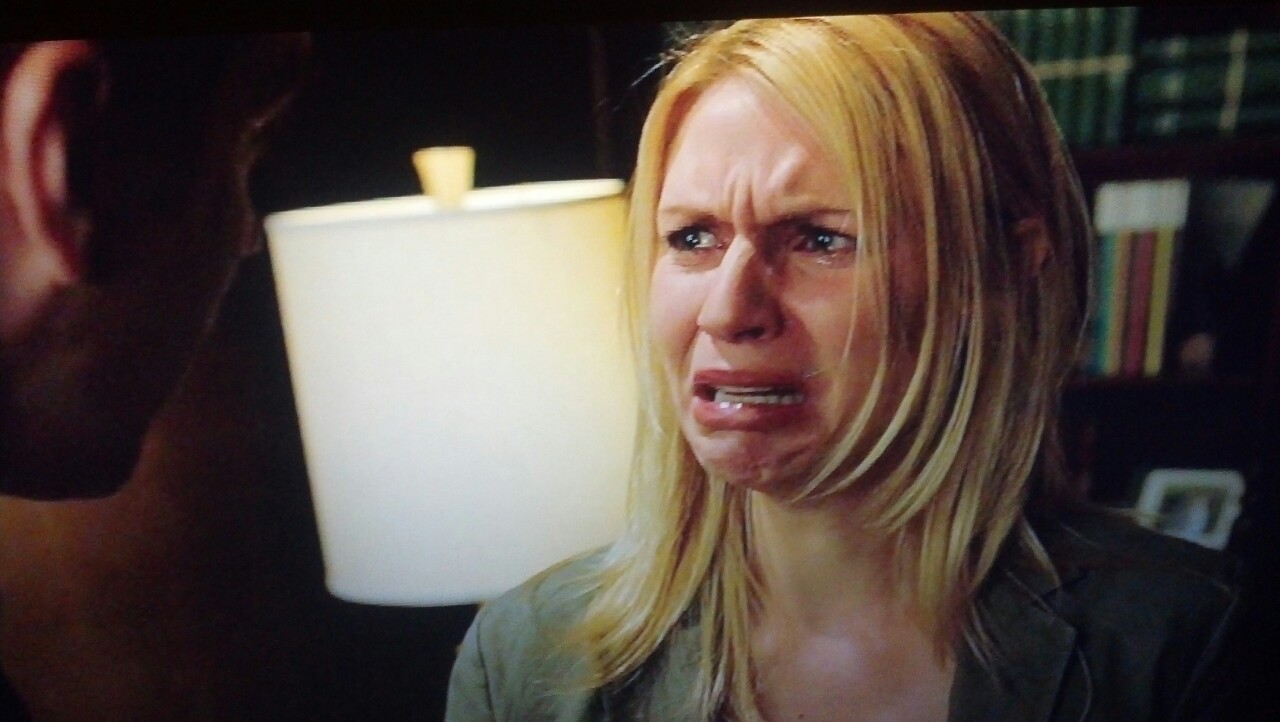
Carrie Mathison Cry Face
You know Carrie has some tales to tell.
Source:http://24.media.tumblr.com/tumblr_mczxud39sS1risuxpo1_1280.jpg
To a certain extent, writing is about storytelling, pure and simple. Telling a tale about a great character, a great story; that's what it's all about. However, if you're willing to dig a little deeper, you will find that most of us are maladjusted in some way. Some of us have had addictions and use our writing to figure out that ever present plague. Others have experienced some sort of violence and use their words to try and make sense of it. If you're seeing a trend here, then you're on the right track; a writer without tragedy, big or small, is useless.

What Makes Tragedy Our Lifeblood?
I argue that tragedy is so important to a good story, a good writer, because it gives you an answer to search for. You may know why you had to get a divorce or why sexism exists, but in the same way that knowledge is differentiated from wisdom, so, too, is knowledge separate from understanding. That understanding, more than anything,  is what gives the writer so much power to craft an honest, authentic story.

Anecdotally, I recently had the misfortune of being defrauded by a debt collector. In trying to do the right thing and improve my financial status, I attempted to pay off a legitimate debt to an illegitimate collector. This, in its own way, is a tragedy. It placed severe limits on weeks of my life, a sacrifice that would have been well worth it had it been legitimate. This is an insignificant type of tragedy when compared to heartache, death, and the like, but it nevertheless serves as a catalyst for a story I'm really interested in telling. (Being proved naive is a great driver it turns out)

Surely, You Can't Mean Every Writer Has Experienced a Tragedy!?!
No, I don't mean to say that every person has experienced tragedy, at least not in the first-hand sense. Even writers who cover the stock market, however, understand a type of loss; they understand what it means for the markets to crash and for people to lose their livelihood, if only in an abstract sense. In the end, this sort of understanding, whether from a first person or third person observer perspective, is essential in crafting a story that people want to read, whether you're droning on about the change in federal interest rates or bringing truth to people in the form of thoughtful fiction.


Read more